Full moon: dates, rise time and the 2026 supermoon
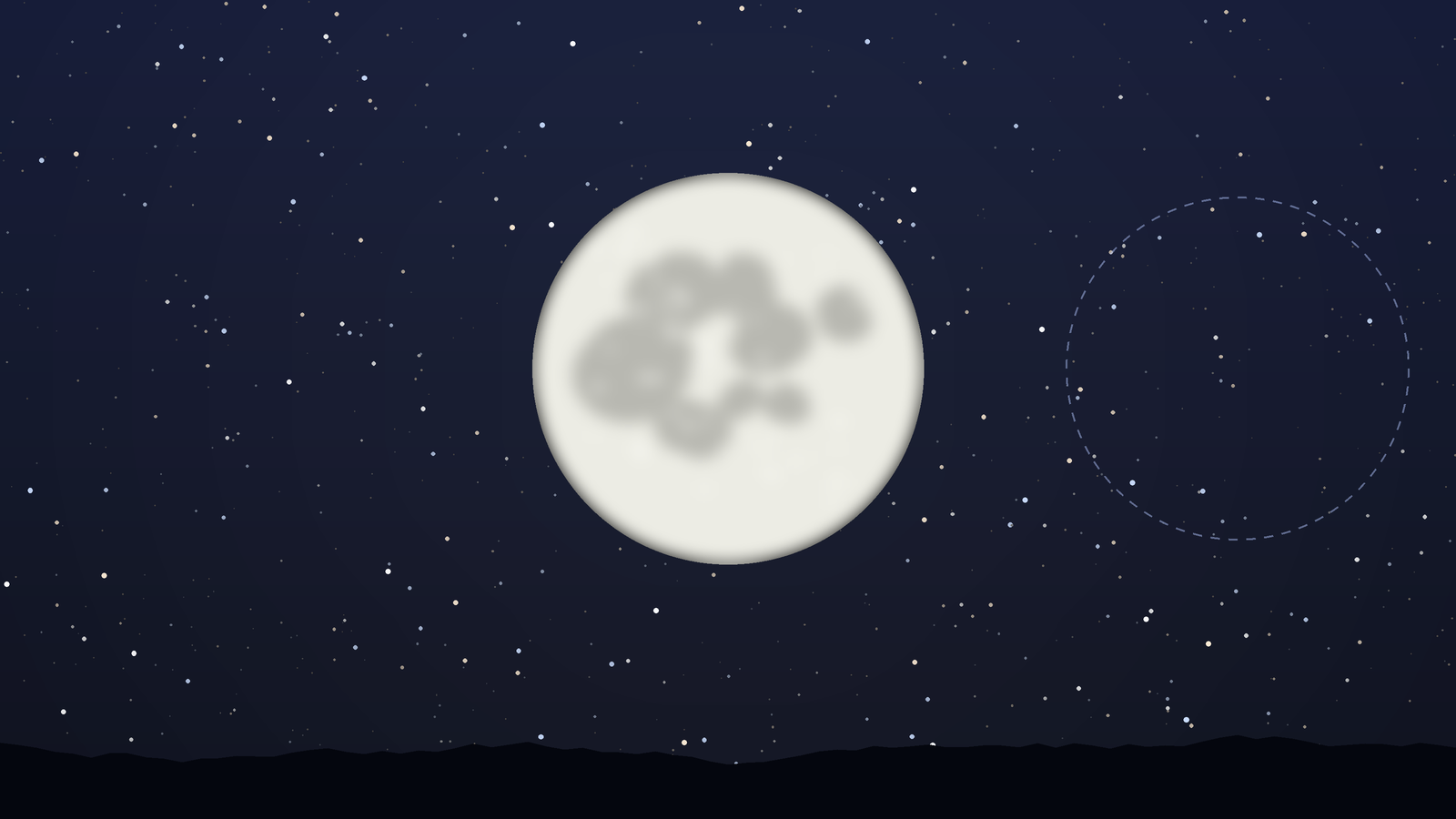
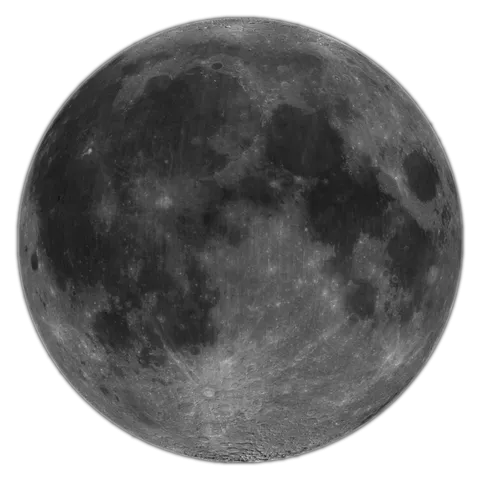
The next full moon is on 24 November 2026 at 3:54 pm in France. Find its rise time, learn why it appears at sunset, and see how the 24 December supermoon differs.
Sky events and alerts
The good nights happen on their own schedule. Planet Finder keeps a calendar of what is coming and tells you before it starts.
For iPhone with iOS 18.6 or later
How it works
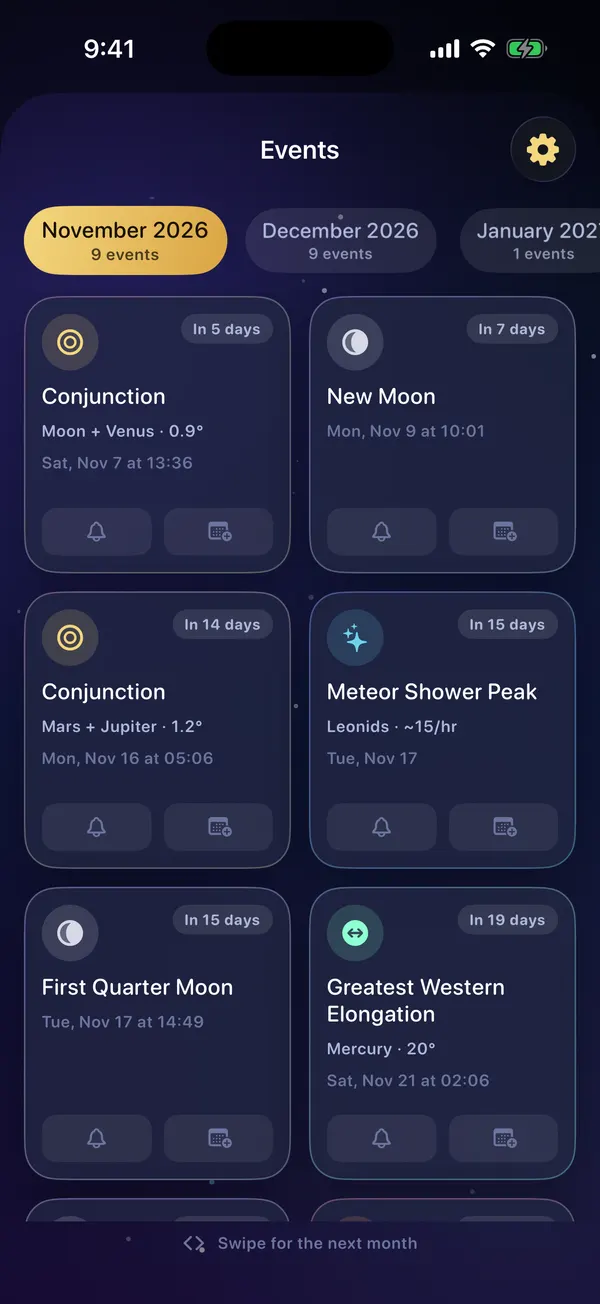
Swipe through the calendar to see what the sky has planned, with dates and times for where you are.
The app sends a notification before the event. Only sky events, and you can turn them off at any time.
One tap puts the event into the calendar you already use.
Peak nights and expected rates for showers such as the Perseids, the Geminids and the Leonids.
Solar and lunar eclipses, supermoons and every phase of the Moon.
Conjunctions, when planets and the Moon pass close to each other, and oppositions, when a planet is at its best.
FAQ
Open the events calendar in Planet Finder to see whether a shower is active and when it peaks. The best hours are usually after midnight, away from bright lights.
Yes. Tap Remind me on any event and the app notifies you before it happens. Reminders are part of Pro. The calendar itself is free.
Moon phases, meteor showers, conjunctions, eclipses, oppositions, greatest elongations, supermoons and the start of the seasons.
No. Planet Finder focuses on planets, stars, constellations, deep sky objects and sky events.
Blog
The next full moon is on 24 November 2026 at 3:54 pm in France. Find its rise time, learn why it appears at sunset, and see how the 24 December supermoon differs.
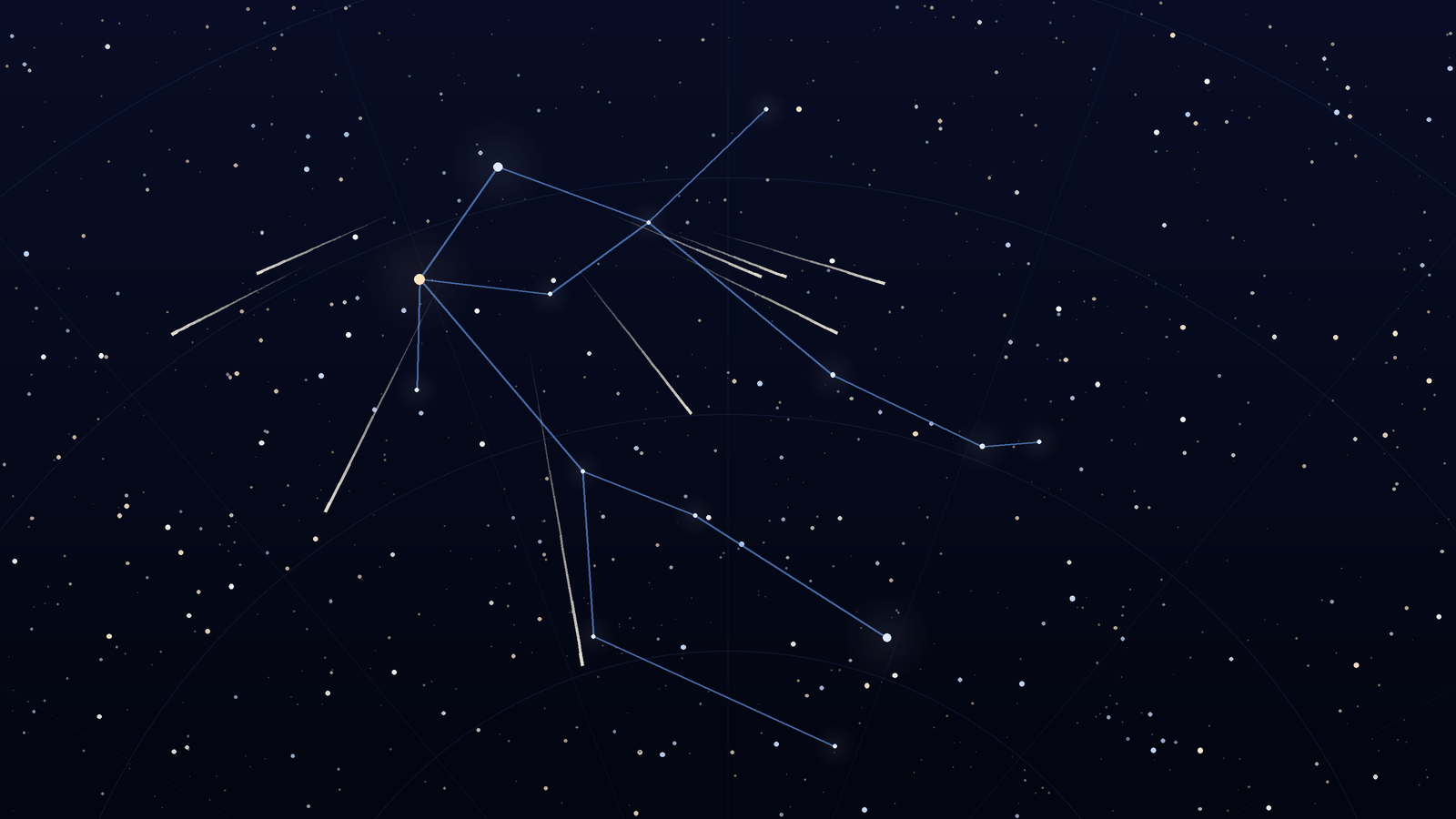
The 2026 Geminids peak on December 13 to 14 under dark skies. Watch from about 9 p.m. to 2 a.m., face Gemini near Castor, and expect bright, slower meteors.
Download Planet Finder for free and find out what is shining above you right now.
For iPhone with iOS 18.6 or later