
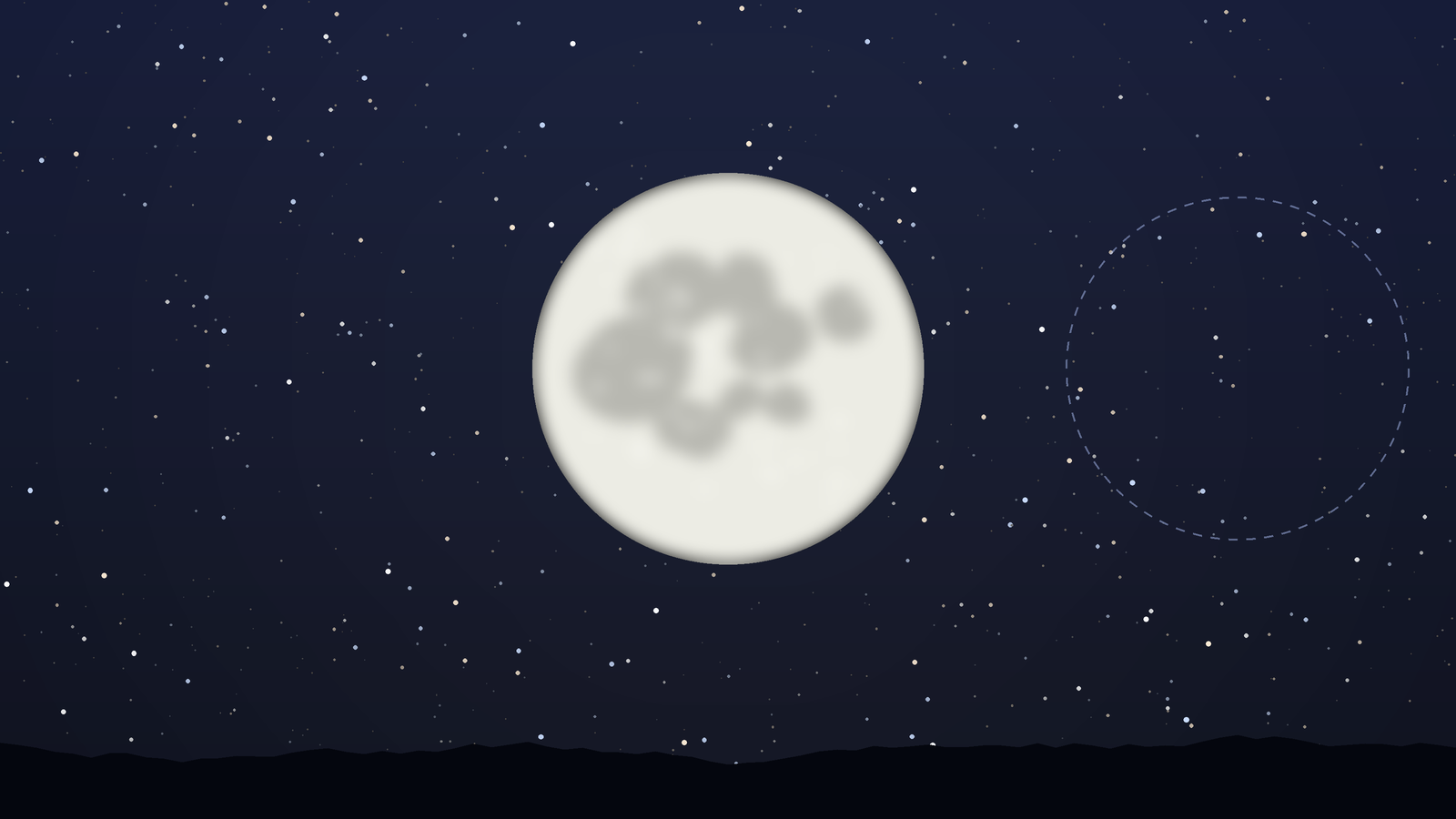
Full moon: dates, rise time and the 2026 supermoon
The next full moon is on 24 November 2026 at 3:54 pm in France. Find its rise time, learn why it appears at sunset, and see how the 24 December supermoon differs.
The Geminid meteor shower peaks on December 13 to 14, 2026. Learn the best viewing time, where to look near Castor, expected rates, and viewing tips.
 By Planet Finder Team 4 min read
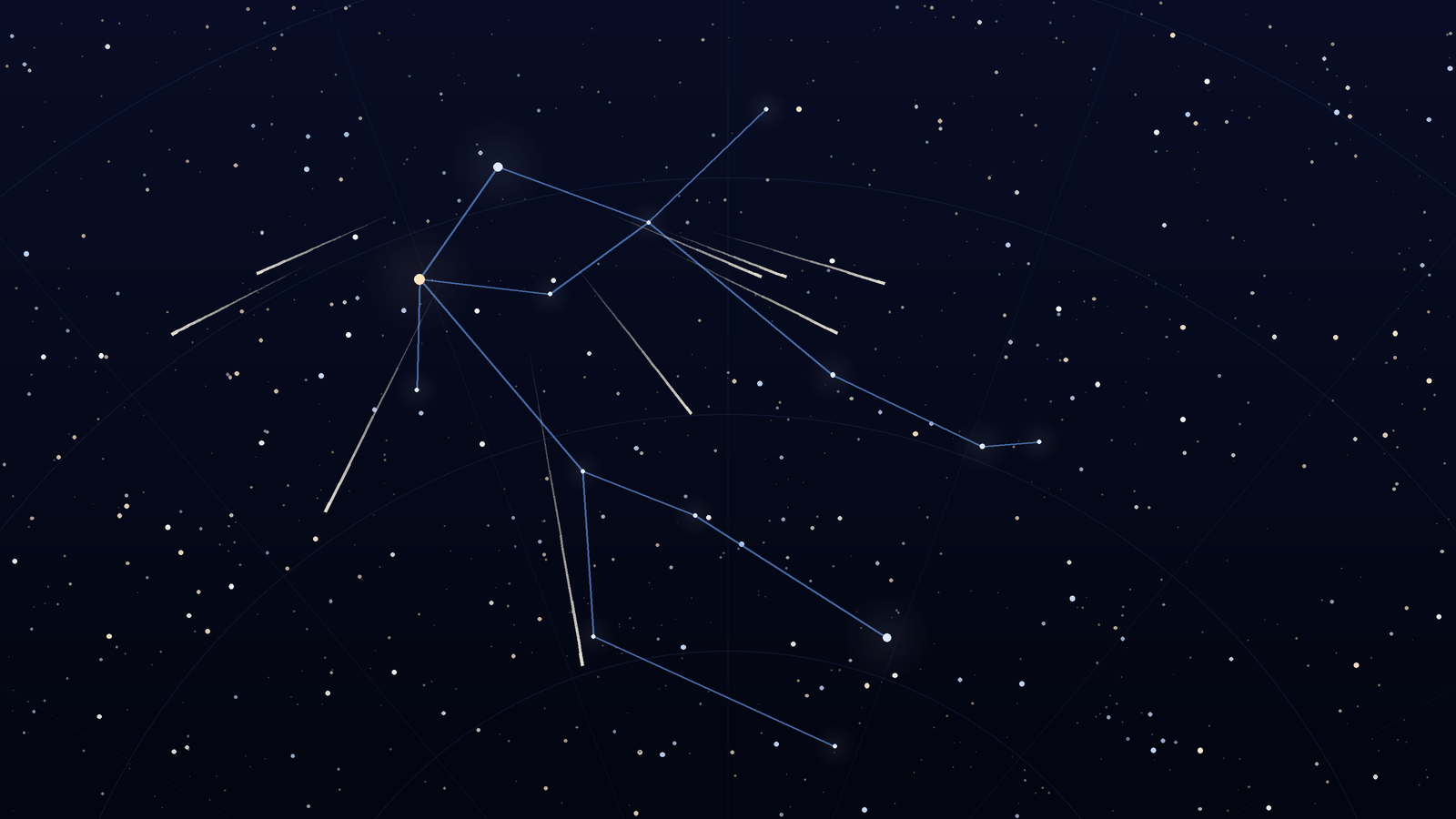
The Geminid meteor shower will peak on the night of December 13 to 14, 2026, with the best chance of seeing meteors from about 9 to 10 p.m. through 2 a.m. local time. Under a dark sky, it can produce up to about 150 meteors per hour, though most observers see fewer, especially near cities.
The Geminids will be active from about December 4 to 20, with the strongest night on December 13 to 14. This is not a single instant for everyone, because the radiant reaches its greatest height at different clock times around the world. Still, the evening and predawn hours on the peak night suit most observers. The International Meteor Organization's annual calendar confirms the 2026 peak dates.
Moonlight will be unusually weak. A new moon falls on December 9 and a first-quarter moon on December 17, so the peak night has no bright Moon to wash out faint meteors. The thin crescent visible early in the evening sets before the best viewing hours, leaving December 13 to 14 properly dark. That makes 2026 an especially favorable year for the Geminids.
The radiant lies near Castor, the northern of Gemini's two brightest stars. It rises in the early evening and is highest around 2 a.m. local time. Start outdoors by about 9 to 10 p.m., find the Gemini region, and face broadly toward Castor. By 2 a.m., the radiant is high, but keep scanning a large part of the sky instead of staring at one point.
The radiant is not a glowing object, and the meteors do not all appear directly beside it. It is the point from which the shower's paths appear to diverge. A Geminid seen well away from Gemini can still belong to the shower if its trail points back toward the radiant. A useful identifying clue is a relatively slow, bright streak that seems to come from the area of Castor.
The International Meteor Organization gives the Geminids a zenithal hourly rate, or ZHR, of about 150. That figure assumes a perfectly dark sky, a radiant near the zenith and an experienced observer. It is not a promise of 150 visible meteors every hour. In practice, roughly 30 to 80 meteors per hour is more realistic from suburban locations to dark sites, while observers under bright city skies can see much less.
The difference comes from light pollution, the Moon, radiant height, sky transparency and the observer's field of view. Even when the formal rate is high, individual streaks arrive irregularly, so several quiet minutes can pass between them. Count what you actually see rather than judging the shower by a minute-by-minute expectation.
NASA identifies asteroid 3200 Phaethon as the Geminids' parent body. Dust shed by this rocky object creates the incoming particles. Geminid meteors enter Earth's atmosphere at about 35 km/s, or 22 miles per second, a little slower than the fastest meteors, and they are often bright enough for unaided eyes to notice. See NASA's overview of 3200 Phaethon.
Preparation matters more than optical equipment. Use this simple setup:
Naked eyes are best for this shower. Binoculars can reveal faint meteors, but their narrow field makes it hard to scan the sky and follow a sudden streak. A telescope is even less practical because it shows too little sky at one time. If you use binoculars, keep them handy and watch without them for most of the session.
Comfort is important because the best time, around 2 a.m., can be cold. Settle into a stable position, protect your neck from a stiff chair and avoid repeatedly checking a bright phone screen. A red lamp or red-display mode is more suitable for the setup area. Once your eyes are adapted, the slow Geminid trails are easier to pick out against a dark sky.
The main advantage is a dark Moon and a shower known for bright members. The Moon is new only four days before the peak and reaches first quarter after it, so the central observing window is dark. Geminids also travel slowly enough to look like luminous threads rather than instant flashes. If the sky is clear and the site is genuinely dark, even a session with a few dozen meteors can be memorable.
If you cannot stay until 2 a.m., begin around 9 to 10 p.m. and you should still see Geminids, although the radiant will be lower. If you miss the exact peak night, the shower remains active through December 20, with rates usually declining away from December 13 to 14. To plan for seeing the Geminids tonight in your own sky, check Planet Finder's Tonight tab for a location-specific plan, open the Events tab for the Geminids and alerts, and use its red night mode to help preserve dark adaptation.
[[app]]
They peak on the night of December 13 to 14, with the best period from about 9 to 10 p.m. through 2 a.m. local time.
Look toward Gemini and Castor. The radiant is highest around 2 a.m., but scan the wider sky rather than staring at one point.
The ideal ZHR is about 150, while real counts are often 30 to 80 per hour from suburban locations to genuinely dark sites.
The new moon is December 9 and the first quarter is December 17, leaving the December 13 to 14 peak night dark.
No. Naked eyes provide the widest view, while binoculars have a narrow field that can make sudden streaks harder to follow.
The next full moon is on 24 November 2026 at 3:54 pm in France. Find its rise time, learn why it appears at sunset, and see how the 24 December supermoon differs.
Download Planet Finder for free and find out what is shining above you right now.
For iPhone with iOS 18.6 or later