
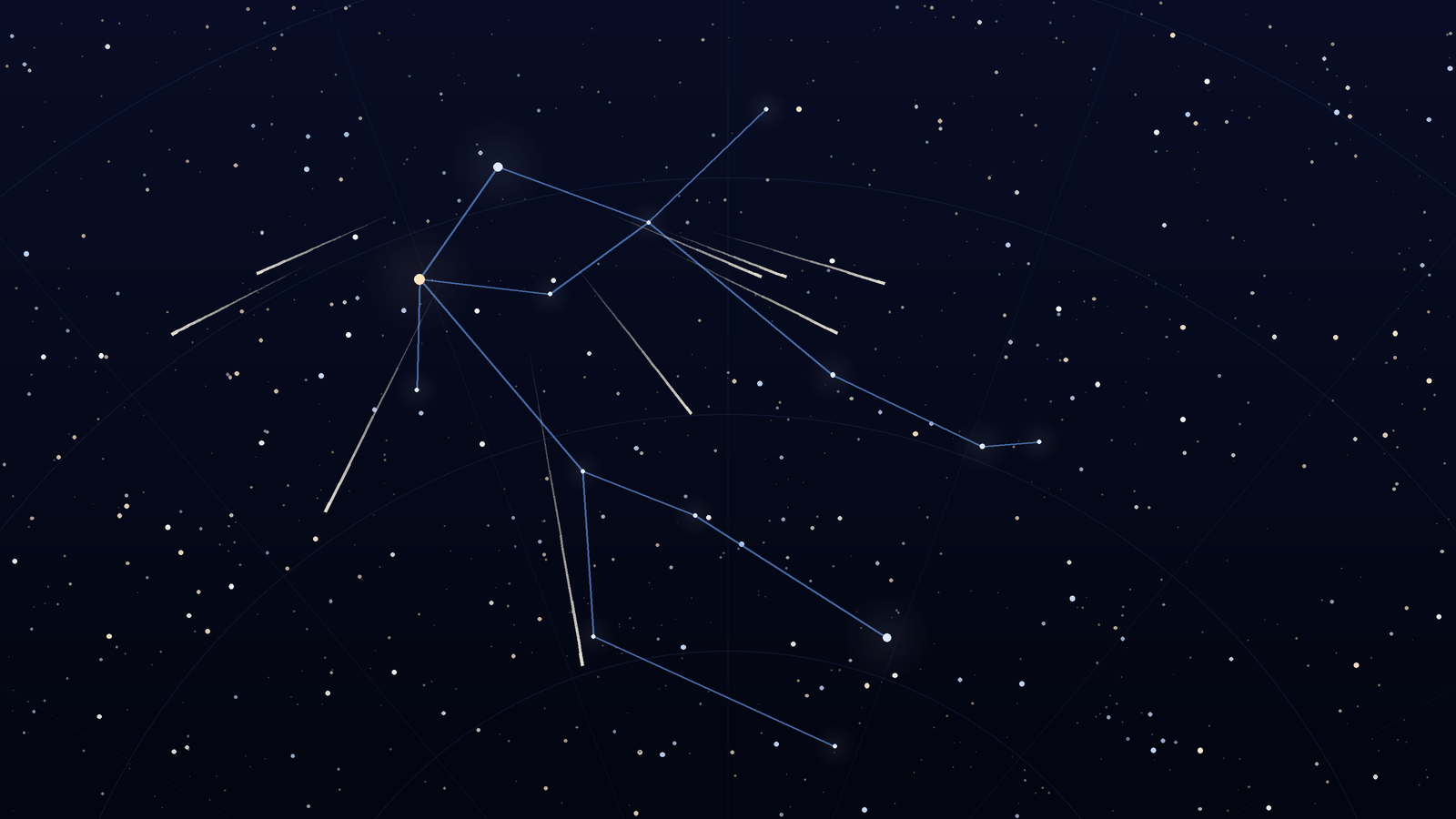
Geminid meteor shower 2026: when and where to look
The 2026 Geminids peak on December 13 to 14 under dark skies. Watch from about 9 p.m. to 2 a.m., face Gemini near Castor, and expect bright, slower meteors.
The next full moon is 24 November 2026 at 3:54 pm in France. Learn when it rises, how to spot it, and when the next supermoon occurs.
 By Planet Finder Team 3 min read
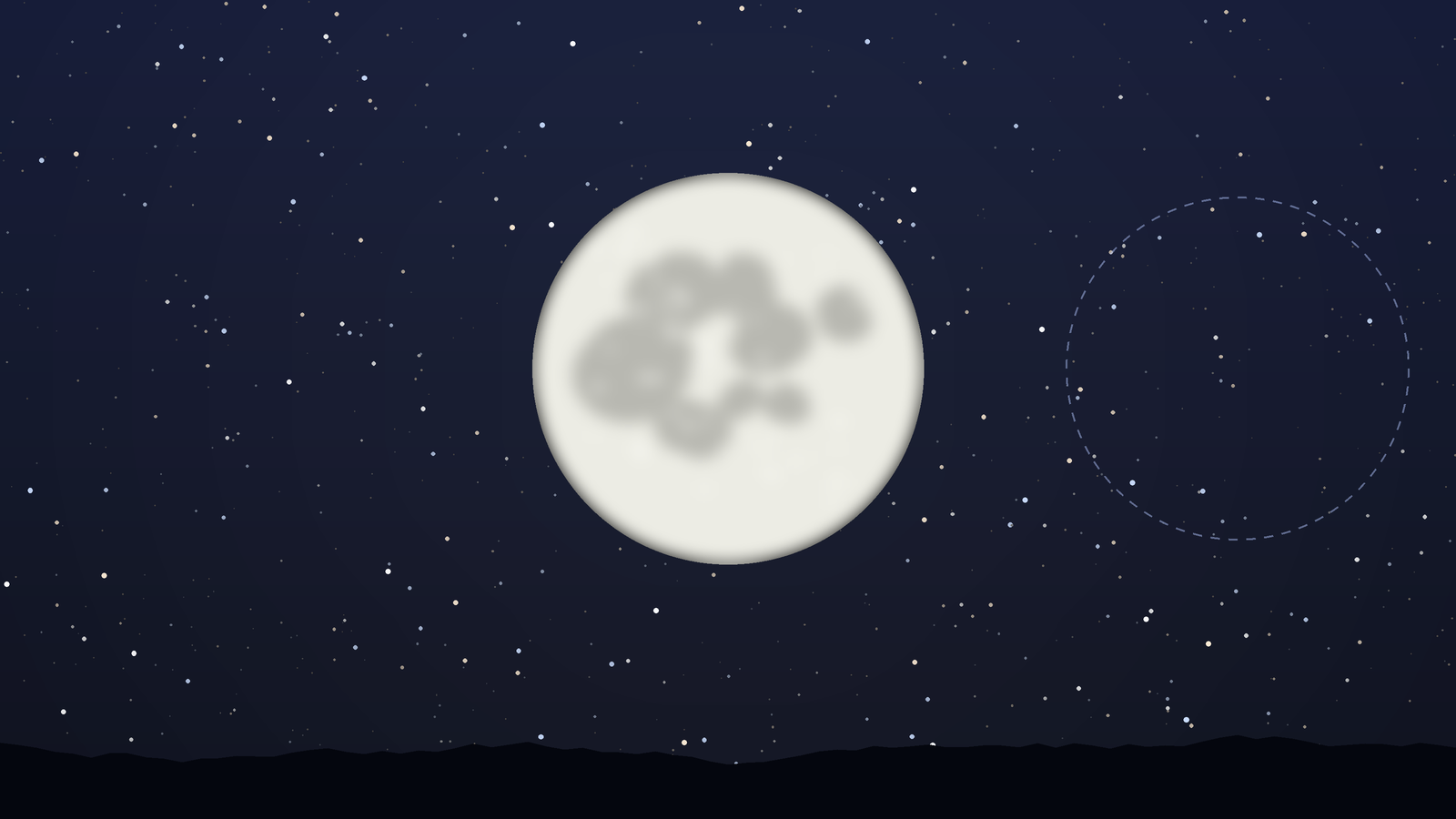
The next full moon occurs on 24 November 2026 at 14:54 UTC, 15:54 in Paris, 16:54 in Istanbul. It rises around sunset and stays visible all night. The next one, on 24 December 2026, will be the year's closest supermoon.
The times below are given in UTC because a full moon can fall on a different calendar date in another time zone.
In metropolitan France, the first three occur on 24 November at 3:54 pm, 24 December at 2:29 am and 22 January at 1:18 pm. The last falls on 20 February at 11:24 pm UTC, but during the night of 20 to 21 February in French local time.
The average lunar cycle lasts 29.53 days, so full Moon dates can shift by roughly a day from one month to the next. The exact instant is not always the best time to look: depending on the location, the Moon may still be below the horizon without any change in its phase.
On 24 November, the full Moon lies in the direction of Taurus, opposite the Sun. Look northeast, starting from east and moving toward north, shortly before or around sunset. A clear, unobstructed horizon is more useful than high magnification.
Once you have identified the bright point, give the Moon a few minutes to rise farther above the horizon. Atmospheric filtering can make it look orange and flattened when low, while a Moon seen higher in the sky looks whiter and rounder. Around midnight or shortly afterward, it reaches its highest point in the southern part of the sky and remains visible until dawn.
Naked-eye viewing is enough to recognize a full Moon. Binoculars reveal more surface detail and crater relief, especially when they are held steadily against a support. Contrast remains limited when the entire illuminated face is visible. Never point binoculars near the Sun.
At the instant of a full moon, the Sun, Earth and Moon are almost aligned, with Earth in the middle. The Moon's illuminated half therefore faces almost entirely toward us. “Full moon” identifies that precise instant, even though the disk appears strongly illuminated for several days.
Because the Moon is opposite the Sun in the sky, it is above the horizon while the Sun is below it. It consequently rises around sunset, reaches culmination near midnight and sets around sunrise. The exact timing varies with latitude, local terrain and the date. NASA explains this cycle in NASA, The Moon.
A supermoon is not a separate lunar phase. According to NASA, What Is a Supermoon, it is a full Moon that occurs near perigee, the closest point of the Moon's orbit to Earth.
The full Moon of 24 December 2026 is the closest full Moon of the year. Compared with a full Moon at apogee, its apparent diameter can be around 14% larger, while its brightness can be up to roughly 30% higher. The disk is not physically enlarged: its distance from Earth changes.
The difference is still difficult to notice with the unaided eye unless two images are compared under similar conditions. The 22 January 2027 full Moon is also close to perigee, making it another interesting period for observation.
The monthly names come mainly from North American traditions. The November 2026 full Moon is the Beaver Moon, December's is the Cold Moon, January 2027 brings the Wolf Moon, and February's is the Snow Moon.
These names connect a season with the Moon, but they are not official astronomical designations and vary between calendars and communities. The dates of the phases are determined astronomically and do not depend on a traditional name.
To prepare for observing the Moon on 24 November, Planet Finder's Tonight tab shows what is visible from your location along with sky events, including lunar phases, and provides alerts. Night mode uses a red display for observing outside with dark-adapted eyes. [[app]]
On 24 November 2026 at 3:54 pm in metropolitan France, which is 14:54 UTC.
Around sunset in the northeast. The precise time depends on the location and local horizon.
Its apparent diameter can be about 14% larger than at apogee, but the difference is difficult to notice with the naked eye.
Yes, for more surface detail. Never point binoculars toward the Sun.
The 2026 Geminids peak on December 13 to 14 under dark skies. Watch from about 9 p.m. to 2 a.m., face Gemini near Castor, and expect bright, slower meteors.
Download Planet Finder for free and find out what is shining above you right now.
For iPhone with iOS 18.6 or later